




Branding
How to Build a Consistent Brand Identity That Customers Trust
Aug
Learning how to build a consistent brand identity that customers trust is essential for businesses that want long-term success. Customers rarely buy from a company after seeing it only once. Instead, they interact with your website, social media profiles, advertisements, proposals, emails, and marketing materials before making a decision. Every one of those interactions shapes their opinion of your business. When every touchpoint looks and feels consistent, customers become more familiar with your brand. That familiarity creates confidence, and confidence eventually turns into trust.
Why Brand Consistency Matters More Than Creativity
Many businesses focus on creating eye-catching designs while overlooking consistency. They redesign social media graphics every few months, experiment with new fonts, introduce different color palettes, and frequently update their visual style. Although these changes may seem harmless, they often confuse customers instead of strengthening recognition.
Consistency allows customers to recognize your business instantly, even before they notice your logo. Familiar typography, colors, layouts, imagery, and messaging create a predictable experience that feels reliable. Businesses that maintain the same identity across every platform appear more professional because customers know exactly what to expect every time they interact with the brand.
How to Build a Consistent Brand Identity That Customers Trust From Day One
The process of how to build a consistent brand identity that customers trust begins with creating a clear branding strategy. Before designing visual assets, define your mission, brand values, target audience, market positioning, and personality. These decisions provide direction for every future design choice and help prevent inconsistent branding as your business grows.
Once the strategy is established, every visual element should support the same message. Your typography should communicate the right personality, your colors should reinforce the emotions you want customers to feel, and your imagery should reflect the audience you want to attract. Strong brands don’t rely on isolated design elements. They build complete visual systems that remain consistent regardless of where customers encounter them.
Develop a Complete Brand Identity System
A logo alone cannot create trust. Customers spend much more time interacting with websites, proposals, presentations, brochures, social media graphics, packaging, and digital advertisements than they do looking at a logo by itself. Every one of these assets should feel like part of the same business.
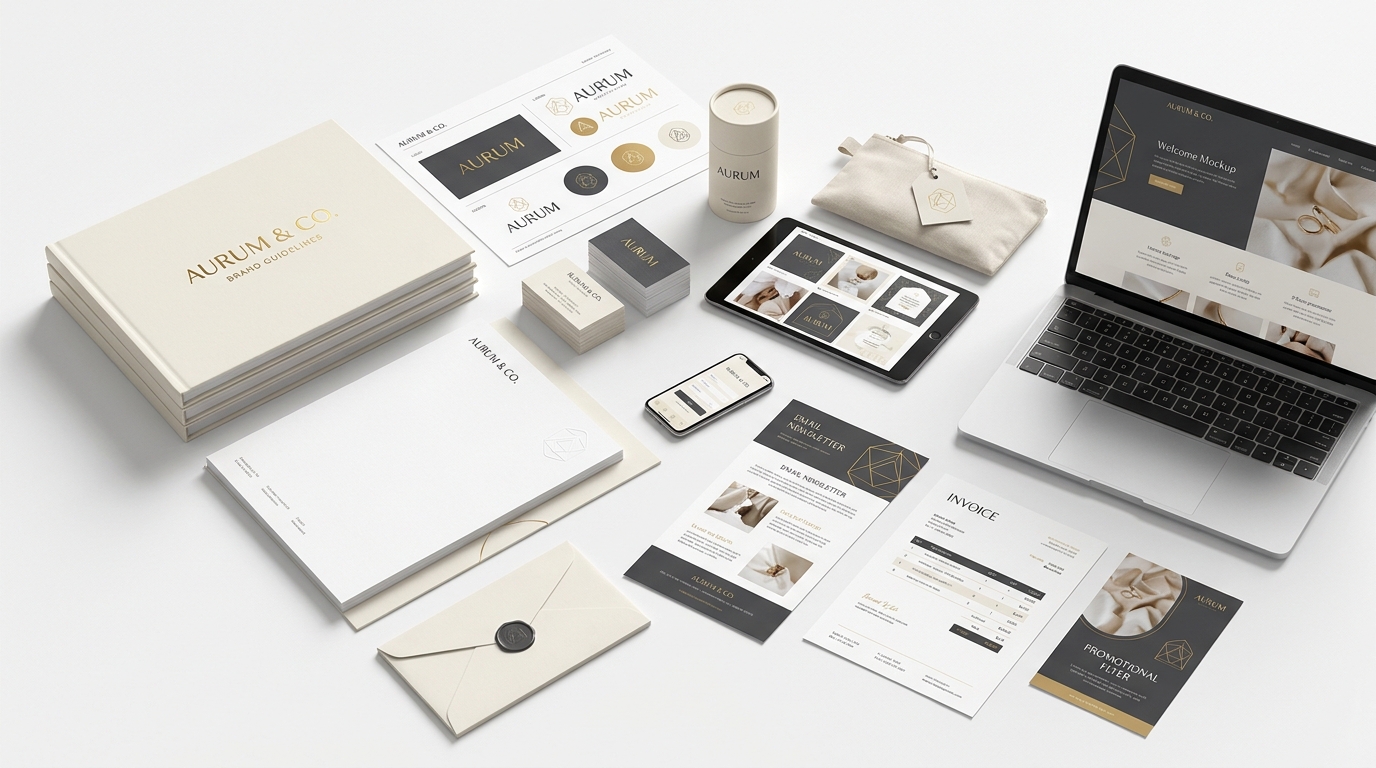
A professional brand identity system normally includes logo variations, typography guidelines, color palettes, iconography, illustration styles, photography direction, layouts, graphic elements, and brand voice. When these components work together, every marketing material reinforces the same identity. Instead of creating individual designs for different platforms, businesses build a reusable system that strengthens recognition over time.
Maintain Consistency Across Every Customer Touchpoint
Brand consistency should extend far beyond visual design. Customers also notice the way a business communicates, responds to inquiries, writes blog articles, publishes social media posts, and presents information on its website. The tone of voice should remain consistent alongside the visual identity to create a unified customer experience.
Your website, portfolio, invoices, quotations, email signatures, presentations, printed materials, and advertising campaigns should all follow the same branding principles. Even small inconsistencies become noticeable when customers interact with multiple channels. Every consistent experience strengthens credibility, while every inconsistency creates unnecessary doubt.
Use Brand Guidelines to Protect Your Identity
As businesses expand, maintaining consistency becomes increasingly difficult. Multiple designers, marketers, developers, and content creators may all contribute to the brand. Without documented standards, each person naturally introduces slight variations that gradually weaken recognition.
Brand guidelines eliminate this problem by establishing clear rules for logo usage, typography, spacing, colors, layouts, imagery, icons, and communication style. Instead of relying on personal interpretation, every new design follows the same framework. This approach ensures your identity remains recognizable whether you’re creating a brochure, launching a website, or publishing a social media campaign.
Invest in Professional Branding for Long-Term Growth
Many businesses initially choose inexpensive templates because they appear fast and affordable. While templates can provide a temporary starting point, they rarely create a distinctive identity that supports long-term growth. As the business expands, generic branding often becomes inconsistent because it was never designed as a complete visual system.
A professionally developed custom brand identity solves this challenge by creating branding specifically for your business. Every design decision supports your goals, audience, and positioning, making future marketing more efficient and more consistent. Instead of repeatedly redesigning assets to correct inconsistencies, every new project starts from a strong foundation that customers already recognize and trust.
Conclusion
Understanding how to build a consistent brand identity that customers trust is about creating a unified experience rather than simply designing attractive visuals. Customers trust brands that appear organized, familiar, and reliable across every interaction. Consistency allows your business to become more recognizable, strengthens credibility, and supports long-term customer relationships that continue to grow over time.
If your branding currently looks different across your website, social media, marketing materials, or printed assets, investing in a professionally designed brand identity can help unify your entire business. A custom branding system gives every customer touchpoint the same professional appearance, making it easier to build trust while creating a stronger foundation for future growth.
Why is brand consistency important?
Brand consistency helps customers recognize your business more easily, builds credibility, strengthens trust, and creates a professional experience across every customer touchpoint.
How do customers develop trust in a brand?
Customers develop trust through repeated positive experiences, consistent branding, professional communication, reliable service, and a recognizable visual identity.
Can small businesses build a consistent brand identity?
Yes. Small businesses benefit significantly from consistent branding because it helps them appear more established and professional while improving customer recognition.
What should a brand identity system include?
A complete brand identity system includes logo variations, typography, color palettes, graphic elements, imagery, layouts, iconography, brand voice, and detailed brand guidelines.
Should I hire a professional brand designer?
Hiring a professional brand designer helps ensure your branding is strategic, consistent, scalable, and aligned with your long-term business goals.





&url=https://shafuradesign.com/shop/35th-anniversary-photo-collage/&media=https://shafuradesign.com/wp-content/uploads/2026/08/il_1140xN.7429877803_lgwb-800x800.avif)
&url=https://shafuradesign.com/shop/customizable-love-photo-collage/&media=https://shafuradesign.com/wp-content/uploads/2026/08/il_1140xN.7371662436_qf3n-800x800.jpg)
Pingback: Canva Business Templates: Create Professional Designs